


Introduction
The phrase Ponas Robotas has attracted increasing attention online, leaving many people wondering what it actually means and why it appears in search results across different websites. Unlike globally recognized technical terms, Ponas Robotas does not have a single universally accepted definition. Instead, it appears in multiple contexts, including language translations, digital media, and discussions related to artificial intelligence and robotics. This diversity often creates confusion for readers who expect one clear explanation but encounter different interpretations.
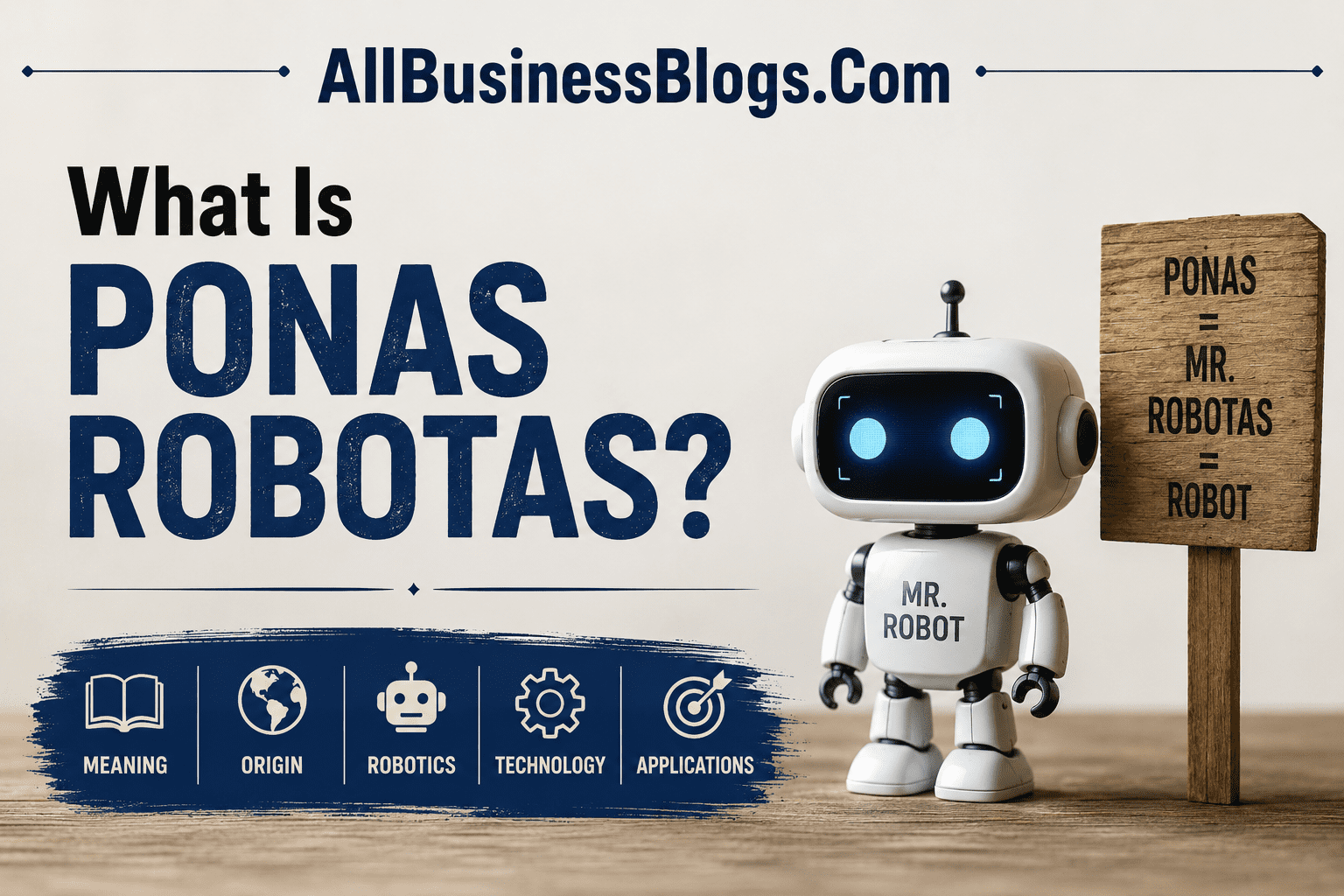
The term “Ponas” is a formal Lithuanian honorific used in the same way as “Mr.” or “Sir.” The word “Robotas” denotes a robot or mechanical entity. As a combined phrase, “Ponas Robotas” can be interpreted in English as “Mr. Robot.” Robot.” Because of this direct translation, many online searches for Ponas Robotas lead to Lithuanian references to the television series Mr. Robot. At the same time, the phrase has also been used in discussions surrounding robotics, automation, and intelligent machines, making it relevant beyond entertainment.
As interest in artificial intelligence continues to grow, internet users increasingly associate Ponas Robotas with smart robotics, AI-powered systems, and emerging automation technologies. Although the term itself is not an officially recognized scientific concept, understanding its linguistic meaning and the contexts in which it appears helps clarify why it has become more visible in search engines. This guide explores the meaning, origin, technological connections, and practical significance of Ponas Robotas using factual, well-researched information rather than speculation.
What Is Ponas Robotas?
IPonas Robotas is a Lithuanian expression that refers to a robotic or artificial intelligence–based character in the Lithuanian language. Robot.” The expression combines two common Lithuanian words: “Ponas,” meaning Mr. or Sir, and “Robotas,” meaning robot. From a linguistic perspective, the phrase is straightforward and is primarily used as a translated title or descriptive expression rather than an official technological term.
Many people encounter Ponas Robotas because it appears in online search results, translated media titles, blogs, and discussions about robotics. This has led some users to assume it refers to a specific robot, AI system, or technology company. In reality, there is no internationally recognized robotics project or artificial intelligence platform officially named Ponas Robotas. Instead, the phrase has gained visibility because of its language usage and its connection to broader conversations about intelligent machines.
The growing popularity of artificial intelligence has also encouraged websites and technology blogs to use Ponas Robotas as a keyword when discussing robotics innovations, automation, and smart machines. As a result, search engines may display content that mixes language explanations with technology-related articles. Understanding this distinction is important because it helps readers separate the literal meaning of the phrase from broader discussions about AI and robotics.
Ponas Robotas Meaning
The meaning of Ponas Robotas is rooted in the Lithuanian language rather than modern computer science. The first word, Ponas, functions as a respectful title similar to “Mr.” in English. The second word, Robotas, directly translates as “robot,” referring to a machine designed to perform tasks automatically or semi-autonomously.
In Lithuanian, “Ponas” means “Mr.” while “Robotas” means “Robot.” When used together, they form the phrase “Mr. Robot,” which follows standard Lithuanian language conventions and is easily understood by native speakers. Because the phrase is so literal, it has frequently been used when translating English-language media or discussing fictional robotic characters.
However, internet users often search for Ponas Robotas expecting a deeper technological meaning. This expectation largely comes from the increasing popularity of robotics, artificial intelligence, and automation. While the phrase itself is not an official AI concept, its wording naturally aligns with modern discussions about intelligent machines, causing search engines to associate it with robotics-related content.
Understanding the linguistic origin of the phrase prevents misunderstandings. Rather than representing a unique scientific invention, Ponas Robotas serves as a translated expression whose online visibility has expanded because of growing public interest in AI technologies and robotics.
The Origin of Ponas Robotas
The origin of Ponas Robotas begins with the Lithuanian language. Lithuanian belongs to the Baltic language family and contains many words that closely correspond to English honorifics and technical terminology. “Ponas” has long been used to politely address men, while “Robotas” entered the language as the modern concept of robots became internationally recognized.
Historically, the word “robot” itself originated from the Czech word “robota,” meaning forced labor or compulsory work. During the twentieth century, the term became internationally popular after its use in literature and eventually evolved into the modern technological meaning associated with automated machines. Lithuania adopted this terminology, leading to the word “Robotas” in everyday language.
As digital content expanded globally, translated media titles became increasingly common. This explains why Ponas Robotas appears in movie databases, television listings, subtitles, and online entertainment platforms. Users searching for the phrase may therefore encounter references to translated media alongside articles discussing robotics and artificial intelligence.
More recently, technology-focused websites have used Ponas Robotas within educational discussions about smart machines and AI innovation. Although these articles are informative, they do not establish Ponas Robotas as an official robotics concept. Instead, they demonstrate how search behavior can broaden the online meaning of a translated phrase over time.
Why Is Ponas Robotas Associated with Artificial Intelligence?
Artificial intelligence has become one of the fastest-growing areas of technology, making almost every term containing the word “robot” relevant to modern digital discussions. Because Ponas Robotas literally includes the word “robot,” many readers automatically associate it with intelligent machines, autonomous systems, and advanced robotics.
Search engines also contribute to this association. When users repeatedly search for Ponas Robotas together with phrases like AI robots, smart robotics, automation technology, or intelligent machines, algorithms begin displaying technology-related content alongside language-based explanations. This creates the impression that Ponas Robotas itself is an AI concept, even though its original meaning is linguistic.
Modern robots increasingly rely on artificial intelligence to analyze information, recognize patterns, navigate environments, and make limited decisions without constant human input. These capabilities have transformed industries ranging from healthcare and manufacturing to logistics and agriculture. Because of these developments, discussions involving robots naturally intersect with AI, making Ponas Robotas relevant within broader conversations about intelligent technologies.
Understanding this relationship helps clarify an important point: Ponas Robotas is not the name of a specific AI system. Instead, it is a phrase that has become connected to AI discussions because of the rapid expansion of robotics and the widespread interest in intelligent automation.
AI Technology Behind Modern Robotics
Artificial intelligence has fundamentally changed how robots operate. Earlier generations of robots were programmed to perform the same repetitive action repeatedly without adapting to changes in their environment. Modern AI-powered robots, however, can process information, recognize patterns, and make decisions based on real-time data. This shift has transformed robots from simple automated machines into intelligent systems capable of assisting humans in increasingly complex situations.
The growing association between Ponas Robotas and AI reflects this technological evolution. Although the phrase itself is a linguistic expression rather than a scientific term, many readers use it while exploring how artificial intelligence influences modern robotics. Understanding the technologies behind intelligent robots provides valuable context for why AI and robotics are often discussed together.
Today’s intelligent robots combine multiple advanced technologies instead of relying on a single software program. Machine learning, computer vision, natural language processing, sensor technology, cloud computing, and edge computing all contribute to making robots more capable, responsive, and efficient. Together, these technologies allow robots to perform tasks that once required continuous human supervision.
Machine Learning Enables Robots to Improve Over Time
One of the most significant developments in robotics is machine learning. Instead of following only fixed instructions, AI-powered robots can analyze previous experiences and improve their performance through data. Every completed task generates information that helps refine future actions.
For example, a warehouse robot responsible for sorting packages can learn the fastest routes through a storage facility after repeatedly navigating different paths. Rather than relying on static programming, the robot gradually identifies more efficient movement patterns, reducing delivery times and minimizing operational errors.
Machine learning is also valuable in quality control. Manufacturing robots equipped with AI can recognize subtle product defects that traditional automated systems might overlook. As these robots inspect more products, their detection accuracy continues to improve, helping manufacturers maintain higher production standards.
The continuous learning capability provided by machine learning represents one of the key differences between traditional automation and modern intelligent robotics.
Computer Vision Helps Robots Understand Their Surroundings
Computer vision gives robots the ability to interpret visual information from cameras and sensors. Instead of simply detecting movement, AI algorithms analyze images to identify people, objects, shapes, colors, distances, and environmental conditions.
This technology plays a critical role in autonomous vehicles, warehouse automation, medical robotics, and industrial manufacturing. Robots can distinguish between different products, safely navigate crowded environments, and accurately identify obstacles before adjusting their movements.
In healthcare, surgical robots use computer vision to assist doctors during delicate procedures by providing enhanced precision and improved visualization. Similarly, agricultural robots rely on computer vision to identify healthy crops, detect plant diseases, and optimize harvesting operations.
Without computer vision, robots would struggle to interact safely and effectively within dynamic environments where conditions constantly change.
Natural Language Processing Improves Human-Robot Communication
Natural Language Processing (NLP) enables robots to understand spoken and written human language. Rather than responding only to pre-programmed commands, AI systems interpret the meaning behind conversations and generate more natural responses.
Voice-controlled service robots found in hotels, airports, hospitals, and customer service centers increasingly depend on NLP technology. These systems recognize multiple languages, answer common questions, provide directions, and assist visitors without requiring constant human assistance.
As conversational AI continues improving, robots are becoming more capable of maintaining meaningful interactions. Instead of functioning solely as mechanical devices, intelligent robots are evolving into collaborative assistants that support people in everyday environments.
This advancement is particularly important as businesses seek more efficient ways to improve customer experiences while reducing operational costs.
Real-World Applications of Ponas Robotas Concepts
Although Ponas Robotas itself is not the name of a commercial robot, the phrase is frequently associated with intelligent robotics because it naturally connects to discussions about AI-powered machines. Understanding where robotics is currently used helps explain why interest in terms related to robots continues growing across search engines.
Modern robots no longer exist only inside research laboratories. They have become practical tools used across healthcare, manufacturing, logistics, education, agriculture, retail, security, and even household environments. Their ability to improve efficiency, reduce repetitive work, and increase safety has made robotics one of the fastest-growing technology sectors worldwide.
Every year, businesses invest billions of dollars into robotics research and automation systems. As artificial intelligence becomes more advanced, robots continue expanding into industries that previously relied entirely on human labor.
Robotics in Healthcare
Healthcare represents one of the most important applications of intelligent robotics. Hospitals use robotic systems to assist surgeons during minimally invasive procedures, allowing greater precision and smaller surgical incisions.
Rehabilitation centers employ robotic devices to help patients recover mobility following strokes or serious injuries. AI-powered rehabilitation systems continuously monitor patient progress and automatically adjust therapy exercises according to individual recovery needs.
Robots also assist with medication delivery, laboratory automation, hospital logistics, and patient monitoring. These technologies reduce repetitive workloads for healthcare professionals while improving patient safety and treatment accuracy.
Rather than replacing doctors and nurses, healthcare robots function as advanced support systems that enhance medical care through improved precision and efficiency.
Manufacturing and Industrial Automation
Manufacturing remains the largest user of industrial robotics worldwide. Modern factories rely on robotic arms to assemble products, perform welding, package goods, and inspect product quality throughout production lines.
AI allows industrial robots to adapt to changing production requirements instead of following identical repetitive sequences. Smart manufacturing systems can automatically identify production bottlenecks, optimize workflows, and reduce unnecessary downtime.
Automotive companies, electronics manufacturers, and consumer goods producers all depend heavily on robotics to maintain consistent product quality while increasing production speed.
The integration of artificial intelligence has transformed factories into intelligent production environments where machines collaborate with human workers instead of simply replacing them.
Logistics and Warehouse Automation
Online shopping has dramatically increased demand for warehouse automation. Large distribution centers now use fleets of autonomous mobile robots to transport inventory between storage shelves and packaging stations.
AI-powered warehouse robots continuously calculate the shortest travel routes while avoiding obstacles and coordinating movements with other machines operating nearby. This allows businesses to process customer orders faster while reducing operational costs.
Automated inventory management systems also use robotics to monitor stock levels, identify missing products, and improve supply chain efficiency.
As global e-commerce continues expanding, intelligent warehouse robotics will become even more important for meeting customer expectations regarding delivery speed and order accuracy.
Agriculture and Smart Farming
Agriculture is increasingly adopting AI-powered robotic systems to improve productivity while reducing environmental impact. Smart farming robots can monitor crop health, detect weeds, analyze soil conditions, and assist with harvesting.
Computer vision enables agricultural robots to distinguish between healthy plants and weeds, allowing targeted treatment instead of widespread pesticide application. This reduces chemical usage while supporting more sustainable farming practices.
Autonomous tractors, drone technology, and robotic harvesting systems also help farmers address labor shortages while improving operational efficiency.
The combination of robotics, artificial intelligence, and precision agriculture represents one of the most promising developments in modern food production.
Home and Personal Assistance Robots
Consumer robotics has become increasingly common over the past decade. Robotic vacuum cleaners, lawn mowers, home security devices, and smart assistants now perform everyday household tasks with minimal human supervision.
Future household robots are expected to provide even greater assistance through advanced AI capabilities. These systems may eventually help elderly individuals with daily activities, monitor home safety, manage household appliances, and provide personalized support based on user preferences.
As artificial intelligence continues advancing, personal robotics will likely become an increasingly important part of everyday life, making intelligent automation more accessible to ordinary consumers.
Key Features of Modern Intelligent Robots
Modern intelligent robots are far more advanced than the programmable machines used several decades ago. Instead of performing only repetitive mechanical tasks, today’s robots combine artificial intelligence, advanced sensors, machine learning, and real-time data processing to operate with greater accuracy and flexibility. These innovations allow robots to work alongside humans in environments that constantly change rather than remaining limited to controlled factory settings.
When people search for Ponas Robotas, they often want to understand what makes modern robots “intelligent.” The answer lies not in a single technology but in the combination of several capabilities that enable robots to observe, analyze, learn, and respond to their surroundings. These features continue to evolve as AI research and robotics engineering advance together.
Understanding these capabilities helps explain why robotics is becoming increasingly valuable across industries such as healthcare, manufacturing, transportation, agriculture, education, and home automation.
Autonomous Decision-Making
One of the defining characteristics of intelligent robots is their ability to make limited decisions without requiring constant human instructions. Instead of following only a fixed sequence of commands, AI systems analyze incoming data and determine the most appropriate response based on current conditions.
For example, an autonomous warehouse robot does not simply move from one location to another. It continuously monitors its surroundings, detects obstacles, calculates alternative routes, and safely reaches its destination even when unexpected objects appear in its path.
This decision-making ability improves operational efficiency because robots can respond immediately to changing situations rather than waiting for manual intervention. However, their decisions remain limited to objectives defined by human programmers and AI models.
Advanced Sensor Technology
Sensors function as the “eyes,” “ears,” and “touch” of modern robots. Cameras, laser scanners, infrared sensors, microphones, pressure sensors, and GPS receivers collect information about the surrounding environment.
AI software processes this information almost instantly, allowing robots to identify objects, measure distances, recognize movement, and interact safely with people nearby. Without these sensors, robots would have no reliable way of understanding the physical world.
Modern industrial robots often combine multiple sensor types simultaneously. This sensor fusion improves accuracy while reducing the likelihood of mistakes during complex operations such as manufacturing, surgical assistance, or autonomous navigation.
As sensor technology continues improving, robots will become even more capable of operating in unpredictable real-world environments.
Human-Robot Collaboration
Unlike older industrial machines that operated inside isolated safety cages, many modern robots are specifically designed to work alongside humans. These collaborative robots, often called cobots, assist workers instead of replacing them completely.
Cobots can perform repetitive lifting, assembly, packaging, and inspection tasks while human employees focus on activities requiring creativity, judgment, and problem-solving. Safety systems continuously monitor nearby people, automatically slowing down or stopping whenever necessary.
This collaborative approach increases workplace productivity while reducing physical strain and repetitive injuries among employees.
Many experts believe that the future of robotics depends on cooperation between humans and intelligent machines rather than complete automation.
Continuous Learning Through Artificial Intelligence
Traditional robots repeat identical actions every time they receive the same instruction. Intelligent robots differ because AI algorithms enable continuous improvement based on collected data.
As robots complete more tasks, they identify patterns, recognize common situations, and refine their responses. This ongoing learning process improves speed, accuracy, and efficiency without requiring complete software redesigns after every update.
For example, customer service robots gradually become better at understanding frequently asked questions, while warehouse robots optimize delivery routes after analyzing thousands of previous movements.
Continuous learning remains one of the most important reasons AI-powered robotics has advanced so rapidly over the past decade.
Benefits of AI-Powered Robotics
Artificial intelligence has transformed robotics into one of the most influential technologies shaping modern industries. Businesses, governments, healthcare organizations, and research institutions increasingly rely on intelligent robots because they improve productivity while solving problems that traditional automation cannot address.
Although robots require significant investment, their long-term benefits often outweigh the initial costs, particularly in industries where repetitive, dangerous, or highly precise work is involved.
Understanding these advantages explains why robotics continues expanding across nearly every major economic sector.
Improved Accuracy and Precision
Robots can perform repetitive tasks with exceptional consistency. Unlike humans, machines do not become physically tired during long production cycles, allowing them to maintain high levels of accuracy over extended periods.
This precision is especially valuable in electronics manufacturing, pharmaceutical production, and medical surgery, where even small mistakes can have serious consequences.
AI further improves accuracy by enabling robots to detect irregularities, recognize defects, and adjust their movements automatically when conditions change.
Increased Workplace Safety
Many industries involve hazardous environments that expose workers to dangerous chemicals, extreme temperatures, heavy machinery, or unstable structures.
Robots can safely perform these high-risk tasks while reducing the possibility of workplace injuries. Mining operations, disaster response teams, nuclear facilities, and chemical processing plants increasingly depend on robotic systems for this reason.
Instead of replacing workers entirely, robotics often removes people from dangerous situations while allowing them to supervise operations from safer locations.
Higher Productivity
Intelligent robots operate continuously with minimal interruptions, allowing businesses to increase production without significantly expanding their workforce.
Manufacturing facilities that integrate AI-powered robotics often experience faster production cycles, reduced material waste, and improved product consistency.
Warehouse automation also enables companies to process thousands of customer orders every day while maintaining accurate inventory management.
Higher productivity ultimately benefits both businesses and consumers through lower operational costs and improved service quality.
Better Data Collection and Analysis
Every action performed by an AI-powered robot generates valuable operational data. Businesses analyze this information to identify performance trends, improve workflows, predict maintenance needs, and optimize production processes.
Rather than simply completing physical tasks, modern robots also function as advanced data collection systems that support informed decision-making.
As industrial analytics continues evolving, robotics will play an even greater role in helping organizations improve efficiency through real-time information.
Challenges and Limitations of Intelligent Robotics
Despite remarkable technological progress, robotics still faces important technical, economic, and ethical challenges. Understanding these limitations provides a balanced perspective on the future of artificial intelligence and automation.
High Development Costs
Designing intelligent robotic systems requires significant investment in hardware, software, engineering, testing, and ongoing maintenance.
Small businesses may struggle to adopt advanced robotics because implementation costs remain relatively high compared to conventional equipment.
Although prices continue decreasing as technology advances, affordability remains an important consideration for many organizations.
Technical Complexity
Modern robots depend on sophisticated software, sensors, networking systems, and AI models working together simultaneously.
Any hardware malfunction, software bug, or communication failure can reduce performance or temporarily interrupt operations.
Regular maintenance, software updates, cybersecurity protection, and technical expertise are therefore essential for maintaining reliable robotic systems.
Ethical and Social Considerations
The rapid expansion of robotics has generated important discussions regarding employment, privacy, accountability, and responsible AI development.
Some repetitive jobs may become increasingly automated, requiring workers to develop new technical skills for emerging careers.
At the same time, AI-powered robots must operate responsibly while respecting privacy, safety standards, and human oversight.
Governments, technology companies, and researchers continue developing ethical guidelines to ensure robotics benefits society while minimizing potential risks.
Dependence on High-Quality Data
Artificial intelligence performs best when trained using accurate, diverse, and representative datasets.
If training data contains errors or insufficient examples, robotic systems may produce unreliable results under unfamiliar conditions.
This highlights the importance of responsible AI development, continuous testing, and ongoing performance monitoring before deploying robots in real-world environments.
The Future of Ponas Robotas and Intelligent Robotics
Although Ponas Robotas is fundamentally a Lithuanian phrase meaning “Mr. Robot,” its growing presence in online searches reflects the increasing public interest in robotics and artificial intelligence. As AI technologies become more sophisticated, terms associated with robots naturally attract greater attention from students, technology enthusiasts, researchers, and businesses looking to understand the future of intelligent machines.
The next generation of robotics will focus less on replacing humans and more on enhancing human capabilities. Future robots are expected to become safer, more adaptable, and capable of working collaboratively in homes, workplaces, hospitals, and public environments. Instead of performing only repetitive physical tasks, they will increasingly assist with decision-making, personalized services, and complex problem-solving.
Advances in artificial intelligence, machine learning, cloud computing, and sensor technology will continue shaping the evolution of robotics. As these innovations mature, intelligent robots will become more accessible, affordable, and capable of handling responsibilities that currently require significant human effort.
AI Will Make Robots More Adaptive
One of the biggest trends in robotics is the shift toward adaptive intelligence. Traditional robots follow predefined instructions, while future AI-powered systems will continuously learn from experience and adjust their behavior based on changing environments.
For example, warehouse robots may automatically redesign delivery routes during peak demand, while healthcare robots could personalize patient assistance according to medical history and recovery progress.
This ability to learn and adapt will make robotics significantly more valuable across industries that require flexibility rather than repetitive automation.
Adaptive intelligence will also improve safety by enabling robots to recognize unexpected situations and respond more appropriately without requiring immediate human intervention.
Human-Robot Collaboration Will Continue to Expand
Rather than creating fully autonomous workplaces, many experts believe the future lies in stronger collaboration between humans and intelligent robots.
Collaborative robots, commonly known as cobots, already assist employees in manufacturing, logistics, healthcare, and research laboratories. Future generations will become easier to program, safer to operate, and capable of understanding more natural human instructions.
This collaborative approach allows workers to focus on creativity, communication, and strategic decision-making while robots handle repetitive, physically demanding, or highly precise activities.
As AI systems become more sophisticated, human-robot teamwork is expected to become a standard part of many professional environments.
Robotics Will Become More Accessible
Historically, robotics was limited to large manufacturing companies with substantial financial resources. However, declining hardware costs and improvements in AI software are making robotic technology available to smaller businesses, educational institutions, and even households.
Small manufacturers can now automate production processes without investing in massive industrial infrastructure. Schools and universities increasingly use educational robots to teach programming, engineering, and artificial intelligence concepts.
At the consumer level, household robots continue expanding beyond vacuum cleaners to include security systems, personal assistants, lawn maintenance devices, and healthcare support technologies.
Greater accessibility will encourage wider adoption while creating new opportunities for innovation across different sectors of society.
Responsible AI Will Shape Robotics Development
As intelligent robots become more integrated into everyday life, responsible AI development will become increasingly important.
Researchers and policymakers continue emphasizing transparency, fairness, cybersecurity, privacy protection, and human oversight when designing AI-powered robotic systems.
Future robotics will likely include stronger safety regulations, improved ethical standards, and greater accountability regarding automated decision-making.
These efforts aim to ensure that artificial intelligence remains a tool that supports human progress rather than creating unnecessary risks.
Common Misconceptions About Ponas Robotas
Because the phrase Ponas Robotas appears in different online contexts, many users misunderstand its meaning. Separating facts from assumptions helps readers better understand what the term actually represents.
Misconception 1: Ponas Robotas Is an Official AI Platform
One common misunderstanding is that Ponas Robotas refers to a specific artificial intelligence company, robotics manufacturer, or commercial AI system.
In reality, there is no internationally recognized robotics platform officially named Ponas Robotas. The phrase is primarily a Lithuanian expression that translates to “Mr. Robot.”
Technology articles discussing AI often use the phrase because of its linguistic connection to robotics, but this does not make it an official technological product.
Misconception 2: Ponas Robotas Refers to a Physical Robot
Some internet users assume Ponas Robotas is the name of a particular robot available for purchase or demonstration.
Currently, there is no widely recognized commercial robot carrying this exact name.
Instead, the phrase functions mainly as a language translation and as a search term associated with broader discussions about intelligent robotics and automation technologies.
Misconception 3: Ponas Robotas Is a Scientific Robotics Concept
Another misconception is that Ponas Robotas represents an established scientific discipline within robotics research.
Scientific publications discussing robotics generally focus on artificial intelligence, autonomous systems, machine learning, computer vision, and human-robot interaction rather than using Ponas Robotas as a technical classification.
Understanding this distinction helps readers interpret online information more accurately.
Frequently Asked Questions
What does Ponas Robotas mean?
Ponas Robotas is a Lithuanian phrase that literally translates to “Mr. Robot.” It combines the Lithuanian words “Ponas” (Mr. or Sir) and “Robotas” (Robot). The phrase itself is linguistic rather than a formal robotics term.
Is Ponas Robotas an AI technology?
No. Ponas Robotas is not an officially recognized artificial intelligence technology or robotics platform. However, because it includes the word “robot,” many online discussions connect it with AI, automation, and intelligent machines.
Is Ponas Robotas related to robotics?
Indirectly, yes. While the phrase itself simply means “Mr. Robot,” it frequently appears in discussions involving robotics because of its literal translation and growing association with artificial intelligence topics.
Why do people search for Ponas Robotas?
People search for Ponas Robotas for different reasons. Some want to understand its Lithuanian meaning, while others are interested in robotics, AI technology, or translated media references associated with the phrase.
Does Ponas Robotas have an official technical definition?
No. There is currently no universally accepted scientific or engineering definition for Ponas Robotas. Its primary meaning comes from the Lithuanian language, while broader technological interpretations are based on context rather than official terminology.
Conclusion
Ponas Robotas is best understood as a Lithuanian phrase that translates to “Mr. Robot.” Although it is not an officially recognized robotics concept or artificial intelligence platform, its growing visibility reflects the worldwide interest in AI, automation, and intelligent machines. As robotics continues evolving, the phrase increasingly appears in educational discussions that explore modern technological innovation.
Understanding the true meaning of Ponas Robotas requires separating its linguistic origin from broader technology-related interpretations. While the phrase itself remains a language expression, it naturally connects with conversations about robotics because intelligent machines have become one of the defining technologies of the modern era.
Looking ahead, advances in artificial intelligence, machine learning, computer vision, and autonomous systems will continue transforming how robots interact with people and perform real-world tasks. Whether encountered through language, technology, or online research, Ponas Robotas serves as a useful starting point for exploring the rapidly expanding world of intelligent robotics and the innovations shaping the future.