



Introduction
Most people have heard of asbestos, but very few are familiar with the term Asbestlint. Even though many people are not familiar with it, this condition describes a potentially dangerous form of asbestos contamination that appears when asbestos-containing materials start to deteriorate, break apart, or become disturbed during maintenance and renovation work.
What makes Asbestlint particularly concerning is that it often resembles ordinary dust or lint. Because of this, many individuals fail to recognize the hazard until exposure has already occurred. Unlike regular household dust, asbestos-containing lint may release microscopic fibers into the air. These fibers can remain suspended for extended periods and may be inhaled without immediate warning signs.
As buildings continue to age and renovation projects become more common, awareness of asbestos-related hazards remains essential. Whether you are a homeowner, property manager, contractor, or simply researching environmental health risks, understanding Asbestlint can help you make informed decisions and reduce potential exposure.
In this comprehensive guide, we will explore what Asbestlint is, how it forms, where people commonly find it, what health risks it causes, how professionals conduct testing, how experts remove it, what legal rules apply, and how safety experts recommend protecting yourself.
What Is Asbestlint?
Quick Answer
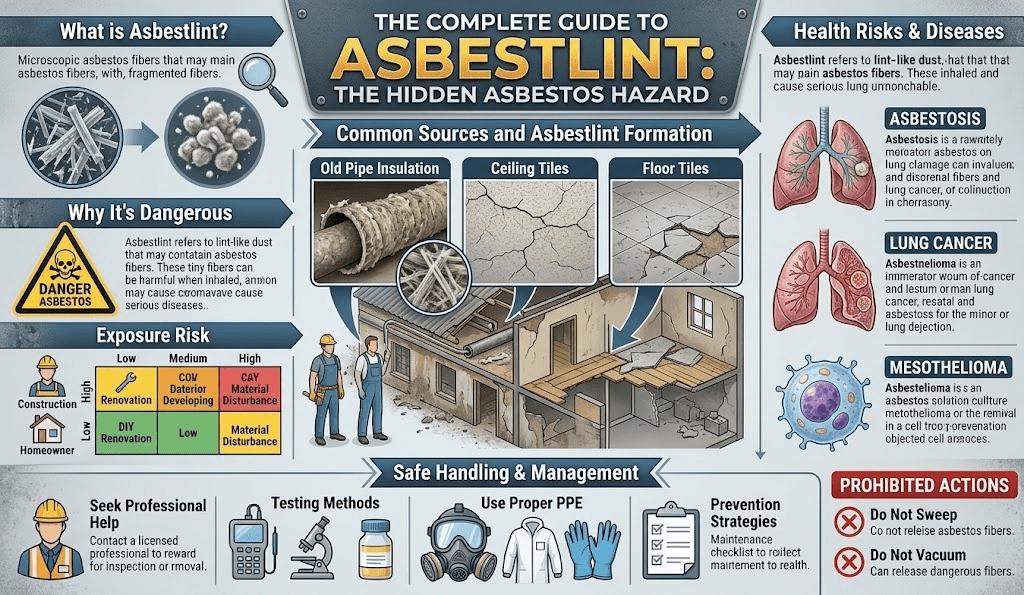
Asbestlint forms as a lint-like accumulation of dust, debris, and microscopic asbestos fibers when asbestos-containing materials deteriorate, become damaged, or people disturb them. These fibers can become airborne and people can easily inhale them, which makes Asbestlint a potential health hazard. Because of this risk, professionals must manage and assess it carefully.
Although formal scientific literature does not always use this term, discussions involving asbestos contamination, building safety, and occupational health increasingly include it.
The Origin of the Term Asbestlint
The word “Asbestlint” combines two concepts:
- Asbestos – a group of naturally occurring mineral fibers known for heat resistance and durability.
- Lint – fine particles or fluffy accumulations of fibers and dust.
Together, the term describes asbestos-containing dust or fiber accumulations that may resemble ordinary lint but carry significantly greater health risks.
This distinction is important because people often underestimate the danger when asbestos contamination appears similar to normal dust.
Asbestlint vs Traditional Asbestos Exposure
Contrary to popular belief, asbestos exposure is not restricted to major demolition operations or industrial settings. It can also result from the gradual deterioration of aging materials that contain asbestos, creating risks that often go unnoticed.
| Asbestlint | Traditional Asbestos Exposure |
| Often appears as dust-like material | Usually linked to direct contact with asbestos materials |
| May accumulate over time | Frequently associated with renovation or demolition |
| Can spread through ventilation systems | Typically concentrated near disturbance points |
| Easily mistaken for ordinary debris | More obvious source of contamination |
Understanding this difference helps property owners recognize risks before they escalate.
Why Asbestlint Is a Growing Concern
Although asbestos use has declined significantly in many countries, millions of older buildings still contain asbestos-based products.
Several factors contribute to growing concern about Asbestlint:
Aging Infrastructure
Buildings constructed decades ago continue to deteriorate, increasing the likelihood of fiber release.
Renovation Activity
Property improvements often disturb hidden asbestos-containing materials.
Lack of Awareness
Many people recognize asbestos as a hazard but are unfamiliar with dust-based contamination risks.
Indoor Air Quality Concerns
Growing attention to environmental health has highlighted the importance of identifying airborne contaminants.
As a result, professionals increasingly emphasize proactive inspection and risk management.
How Asbestlint Forms
Asbestlint typically develops when asbestos-containing materials begin to break down.
Several conditions can accelerate this process.
Material Aging
Over time, insulation, ceiling coatings, and other building materials naturally weaken.
Moisture Damage
Water intrusion can damage asbestos-containing products and increase fiber release.
Mechanical Disturbance
Drilling, sanding, cutting, and demolition activities may generate asbestos dust.
Vibration and Air Movement
HVAC systems, machinery, and building vibrations can distribute fibers throughout a structure.
Poor Maintenance
Neglected materials often deteriorate faster than properly maintained systems.
The combination of these factors creates conditions where asbestos fibers may accumulate as lint-like debris.
Health Risks Associated with Asbestlint
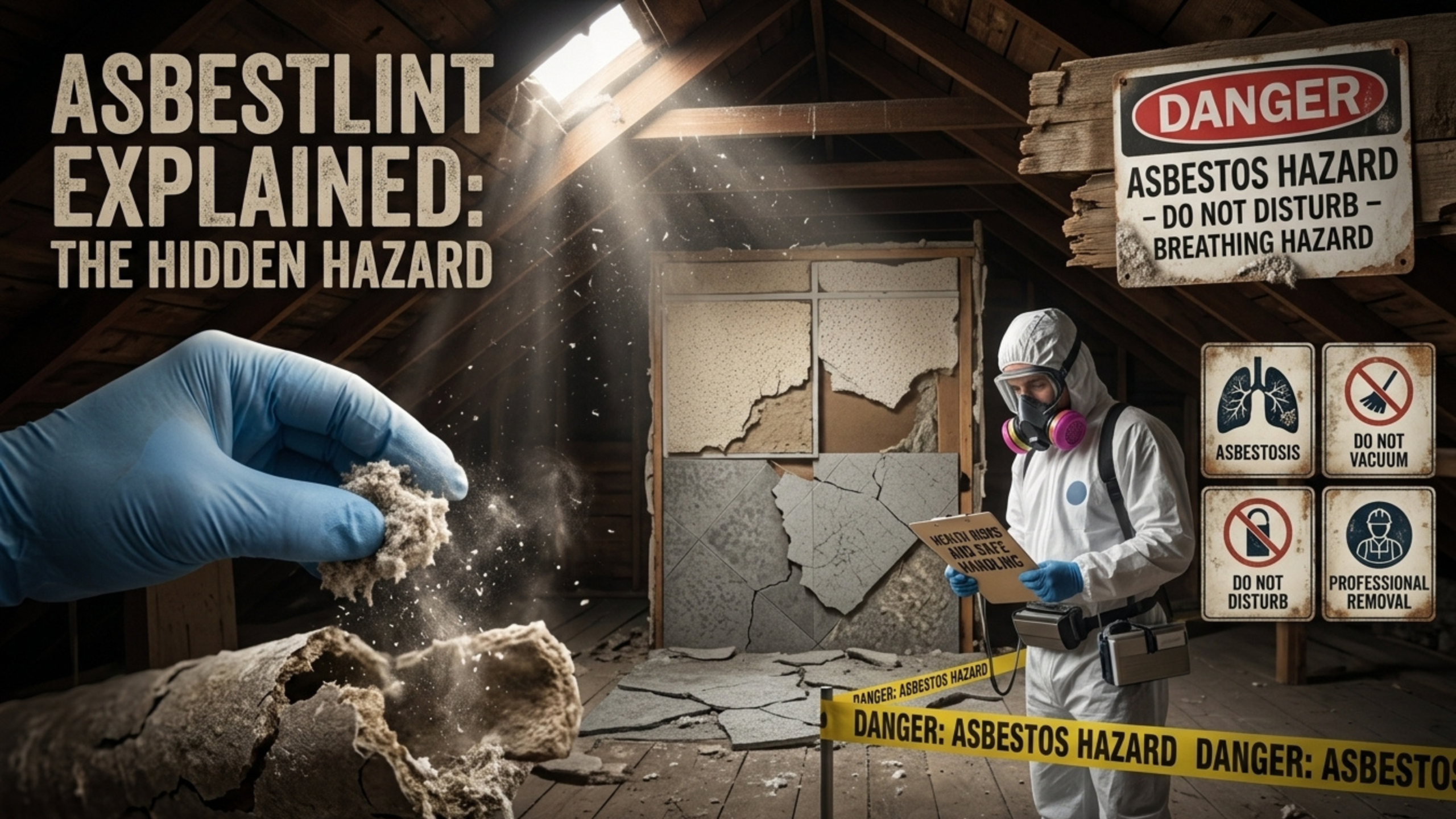
The greatest danger posed by Asbestlint comes from its microscopic fibers. Unlike ordinary dust particles, asbestos fibers are extremely small, durable, and resistant to breakdown. Once released into the air, they can remain suspended for hours and may be inhaled without the person realizing it.
What makes asbestos particularly hazardous is the body’s inability to effectively remove these fibers after inhalation. Over time, trapped fibers can cause inflammation, scarring, and cellular damage that may eventually lead to serious disease.
How Asbestos Fibers Affect the Human Body
When asbestos fibers enter the respiratory system, they travel deep into the lungs. Because of their needle-like shape, many fibers become lodged in lung tissue rather than being expelled naturally.
This can trigger:
- Chronic inflammation
- Tissue scarring
- Reduced lung function
- Cellular mutations
- Long-term respiratory complications
In many cases, symptoms may take decades to become visible after the initial exposure.
Major Diseases Linked to Asbestlint Exposure
Asbestosis
Asbestosis is a progressive lung disease caused by prolonged exposure to asbestos fibers.
Common symptoms include:
- Persistent coughing
- Difficulty breathing
- Chest tightness
- Fatigue
- Reduced physical endurance
Because lung tissue becomes scarred, breathing gradually becomes more difficult over time.
Lung Cancer
Long-term asbestos exposure significantly increases the risk of lung cancer.
Risk factors include:
- Repeated exposure
- Occupational contact
- Smoking combined with asbestos exposure
- Poor workplace protection
Individuals who smoke and are exposed to asbestos face a substantially higher risk than non-smokers.
Mesothelioma
Mesothelioma is one of the most serious asbestos-related diseases.
This rare but aggressive cancer affects the protective lining surrounding:
- The lungs
- The abdomen
- The heart
Mesothelioma is strongly associated with asbestos exposure and often develops decades after initial contact.
Pleural Thickening
Pleural thickening occurs when the lining around the lungs becomes damaged and thickened.
Potential symptoms include:
- Shortness of breath
- Chest discomfort
- Reduced lung capacity
Symptoms of Possible Asbestlint Exposure
One of the most difficult aspects of diseases caused by asbestos is that they often take many years before symptoms appear.
A person may feel completely healthy for many years before symptoms develop.
Possible warning signs include:
Respiratory Symptoms
- Persistent cough
- Wheezing
- Breathing difficulties
- Frequent respiratory infections
Physical Symptoms
- Chronic fatigue
- Unexplained weight loss
- Chest pain
- Reduced exercise tolerance
Advanced Symptoms
- Severe breathlessness
- Ongoing chest discomfort
- Persistent respiratory problems
If symptoms develop and there is a history of asbestos exposure, medical evaluation should be sought promptly.
Who Is Most at Risk?
Although anyone can potentially be exposed, certain groups face a higher level of risk.
Construction Workers
Workers involved in renovations, demolitions, and repairs frequently encounter older building materials.
Maintenance Personnel
Routine maintenance may disturb asbestos-containing materials hidden within structures.
Electricians and Plumbers
Work behind walls and ceilings often exposes these professionals to aging insulation products.
Industrial Workers
Factories historically used asbestos in machinery, insulation, and manufacturing processes.
Shipyard Employees
Ships built before modern regulations frequently incorporated asbestos products for fire protection and insulation.
Homeowners Renovating Older Properties
DIY renovation projects can accidentally disturb asbestos-containing materials.
Where Asbestlint Is Commonly Found
Asbestlint can develop in locations where asbestos materials have deteriorated or been disturbed.
Residential Properties
Older homes may contain asbestos in:
- Ceiling textures
- Floor tiles
- Pipe insulation
- Roofing materials
Commercial Buildings
Common sources include:
- Fireproofing systems
- Insulation products
- Ceiling panels
- Mechanical systems
Industrial Facilities
Factories often used asbestos because of its durability and heat resistance.
Schools and Public Buildings
Many educational and government facilities were constructed during periods when asbestos use was widespread.
Shipyards
Marine vessels historically relied heavily on asbestos-based insulation.
How Professionals Detect Asbestlint
Because asbestos fibers are microscopic, visual inspection alone is not sufficient.
Professional assessment is usually required.
Initial Visual Inspection
Inspectors begin by examining:
- Damaged insulation
- Crumbling materials
- Dust accumulations
- Water-damaged areas
- Mechanical systems
Visual observations help identify materials requiring further testing.
Air Sampling
Air testing measures airborne fiber concentrations.
This process involves:
- Collecting air samples.
- Filtering airborne particles.
- Sending samples for laboratory analysis.
- Comparing results against safety standards.
Air monitoring is often used before, during, and after remediation projects.
Bulk Material Sampling
Suspected materials are collected and analyzed in a laboratory.
Examples include:
- Ceiling tiles
- Pipe insulation
- Roofing materials
- Flooring products
This helps determine whether asbestos is present.
Surface Sampling
Dust and debris are collected from surfaces such as:
- Floors
- Ductwork
- Equipment
- Shelving
- Structural components
Surface sampling can reveal contamination levels.
Laboratory Testing Methods
Several scientific techniques are used to identify asbestos fibers.
Polarized Light Microscopy (PLM)
PLM is commonly used for building material analysis.
Benefits include:
- Cost effectiveness
- Reliable identification
- Wide industry acceptance
Transmission Electron Microscopy (TEM)
TEM provides highly detailed analysis of microscopic fibers.
Advantages include:
- Exceptional accuracy
- Identification of extremely small fibers
- Advanced contamination assessment
Phase Contrast Microscopy (PCM)
PCM is frequently used for occupational air monitoring programs.
It helps estimate airborne fiber concentrations.
Safe Handling Guidelines
If Asbestlint is suspected, proper precautions are essential.
Avoid Disturbing Materials
Do not:
- Drill
- Cut
- Sand
- Sweep
- Vacuum using ordinary equipment
These activities may release additional fibers.
Restrict Access
Limit access to affected areas until proper assessment is completed.
Use Appropriate Protective Equipment
Professionals typically use:
- Respirators
- Disposable coveralls
- Gloves
- Eye protection
Seek Professional Assistance
Qualified asbestos specialists can safely evaluate contamination risks.
Common Mistakes Property Owners Make
Many exposure incidents occur because of preventable mistakes.
Ignoring Early Warning Signs
Damaged insulation or deteriorating materials should never be ignored.
Assuming All Dust Is Harmless
Not all dust is ordinary household debris.
Performing DIY Removal
Improper handling frequently increases contamination.
Delaying Professional Inspection
Waiting may allow conditions to worsen.
Advantages of Early Detection
Identifying contamination early offers several benefits.
Improved Safety
Potential exposure can be minimized before significant contamination occurs.
Reduced Cleanup Costs
Smaller problems are generally easier and less expensive to manage.
Better Regulatory Compliance
Early action helps meet safety requirements.
Increased Property Value Protection
Proper management preserves long-term property integrity.
Conclusion
Asbestlint is a serious environmental and health concern that often goes unnoticed because it resembles ordinary dust. However, unlike normal debris, it may contain microscopic asbestos fibers that can pose long-term risks when inhaled.
The danger increases in older buildings and during renovation or repair work, where hidden asbestos materials can break down and release harmful particles into the air. Since symptoms may take years to appear, early awareness is extremely important.
Proper detection, testing, and professional handling play a key role in controlling exposure. Ignoring warning signs or attempting DIY removal can significantly increase the risk instead of reducing it.
Following safety guidelines and regulations helps prevent unnecessary exposure and protects both workers and residents. Regular inspection and responsible maintenance are essential steps in managing potential contamination.
By staying informed and taking timely action, we can reduce the risks associated with Asbestlint and ensure safer living and working environments for the long term.